For our Strategic Design Studio, we worked with SDG 12: Responsible Consumption and Production, focusing on central Madrid and, in particular, the shopping corridor around Calle Fuencarral. Instead of treating overconsumption as a problem of “irrational shoppers”, we framed it as a form of everyday addiction: people using shopping and scrolling to manage loneliness, anxiety and insecurity. Our goal was to design an ecosystem of supports that could realistically live in the city and help people change their relationship with consumption on their own terms.
We mapped emotional triggers, social pressures and spatial cues in Fuencarral, and combined this with insights from addiction theory and interviews with an existing rehabilitation centre. From there, we developed Centro Lucidus / Recupera tu vida: a three-level speculative program that combines individual work (understanding emotional roots), group processes (talking about money, triggers and identity) and environmental change (low-stimulus, calming spaces plus aftercare).
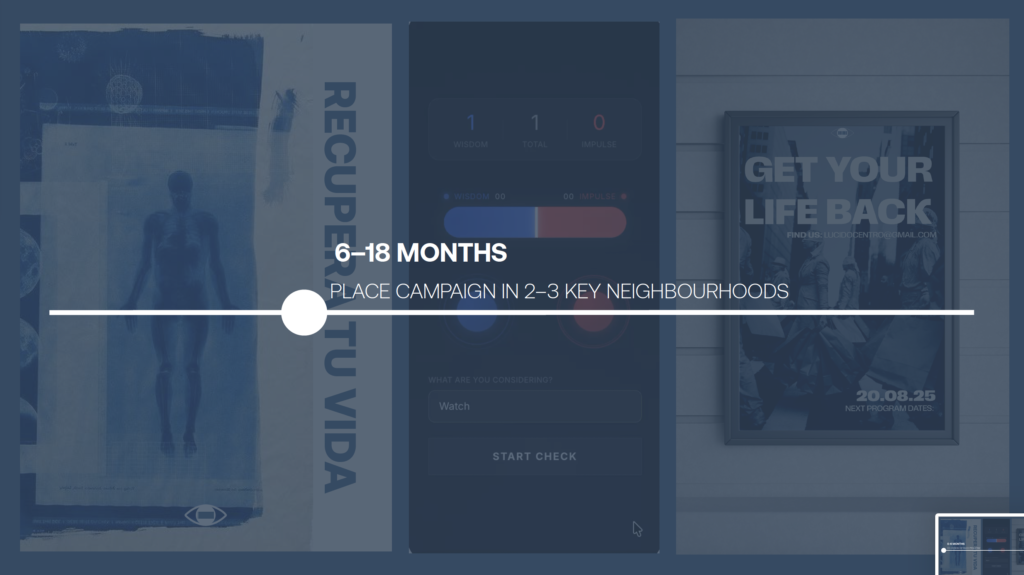
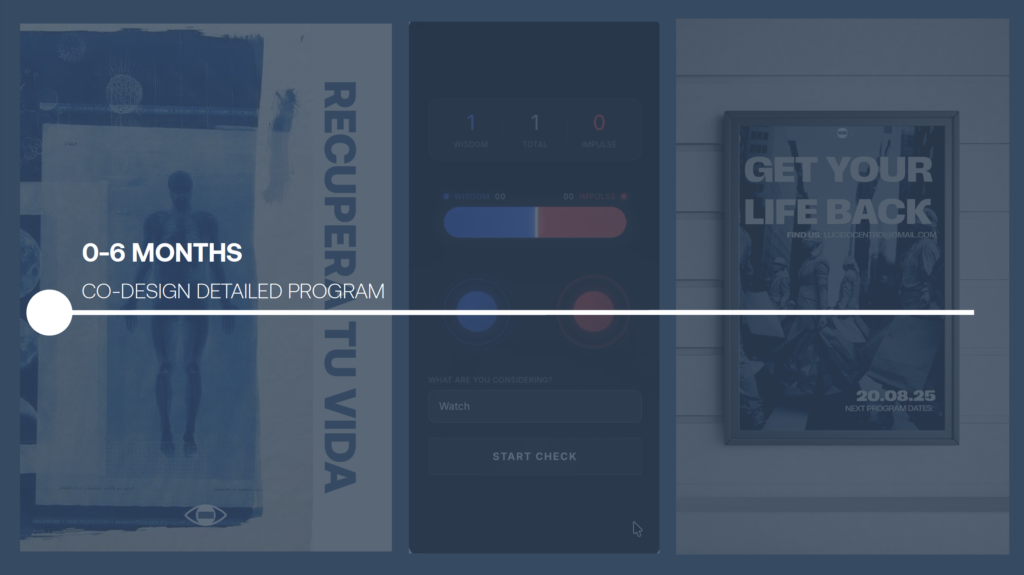
To ground this strategy, we prototyped three concrete interventions and tested them on Fuencarral:
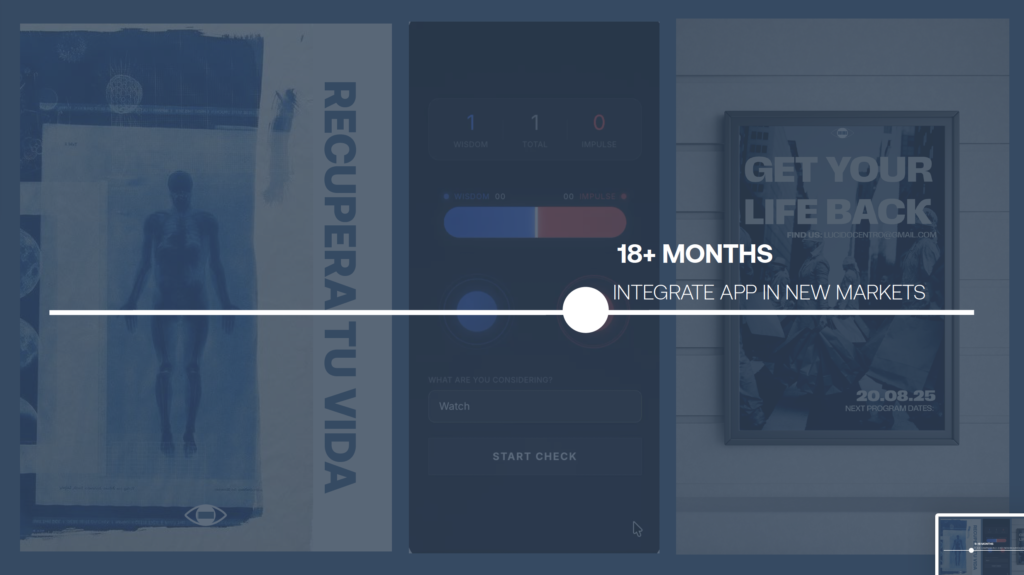
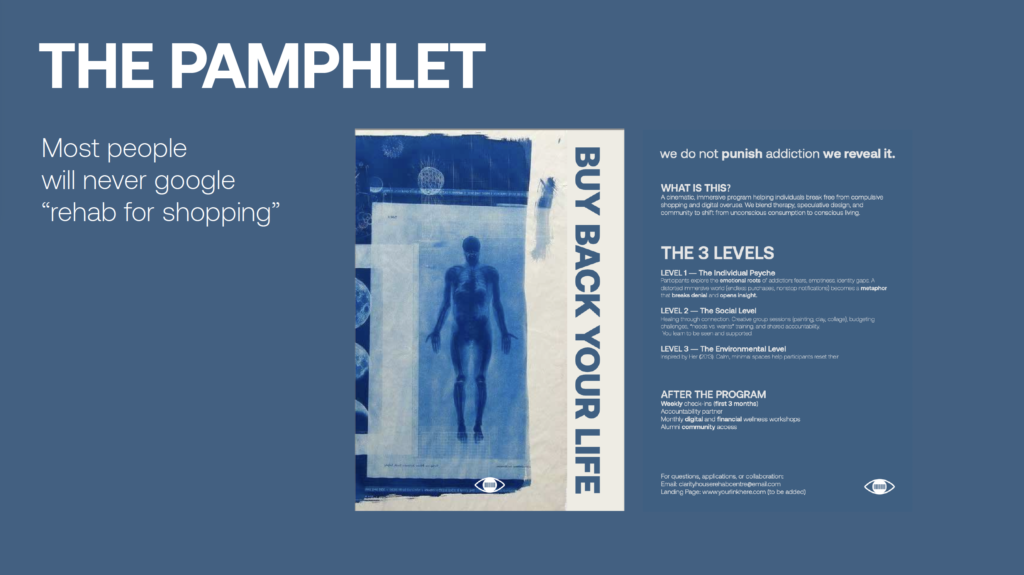
- Pamphlet – “Recupera tu vida”
A printed invitation that explains compulsive shopping and digital use as addiction, and offers the program as support rather than judgment. We tested it by handing it to passersby, asking what they thought it was about, whether they’d keep it, and what language felt too harsh or too vague. - Mobile decision game (app)
A Not-Boring-inspired interface that guides people through a short, playful “before you buy” check. On the street, we walked people through a quick scenario (an impulse purchase) and listened to how the questions made them reflect on need, emotion and timing. - Street campaign
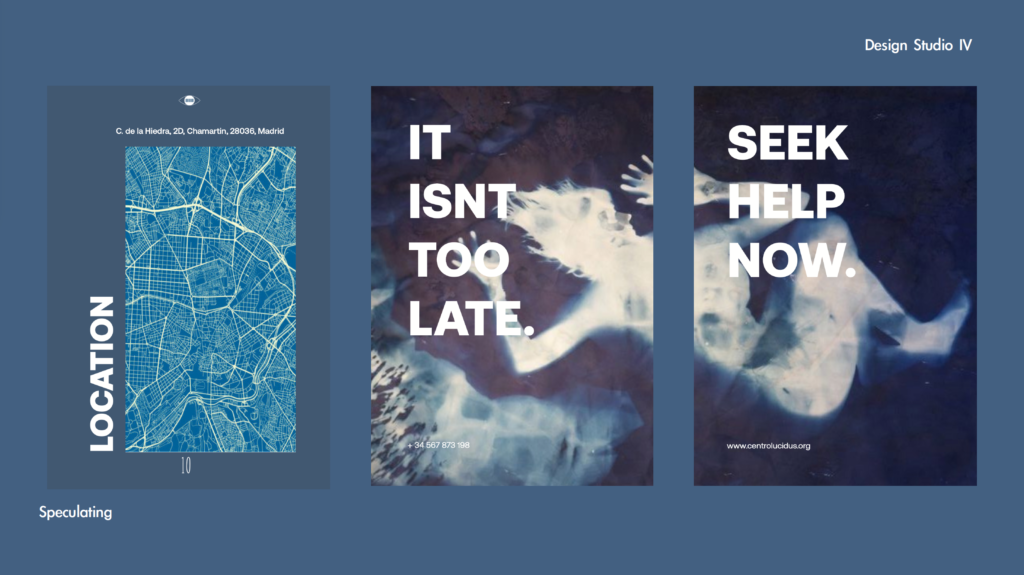
Poster concepts installed in context (bus stops, walls near shops) that visualise the hidden emotional cost of overconsumption and point back to the program and app. We observed who stopped, what they understood at first glance, and how the visuals needed to shift to feel clearer and more caring.
Together, these interventions turn the project from a speculative rehab centre into a strategic system for Madrid: one that links psychology, public health, digital tools and urban communication, and offers a concrete, emotionally intelligent way to move SDG 12 from policy language into everyday life.